Where Do Humans Look When Demonstrating to Robots?
Human Gaze Behavior in Pick-And-Place Tasks across Demonstration Devices



Overview Video
Abstract
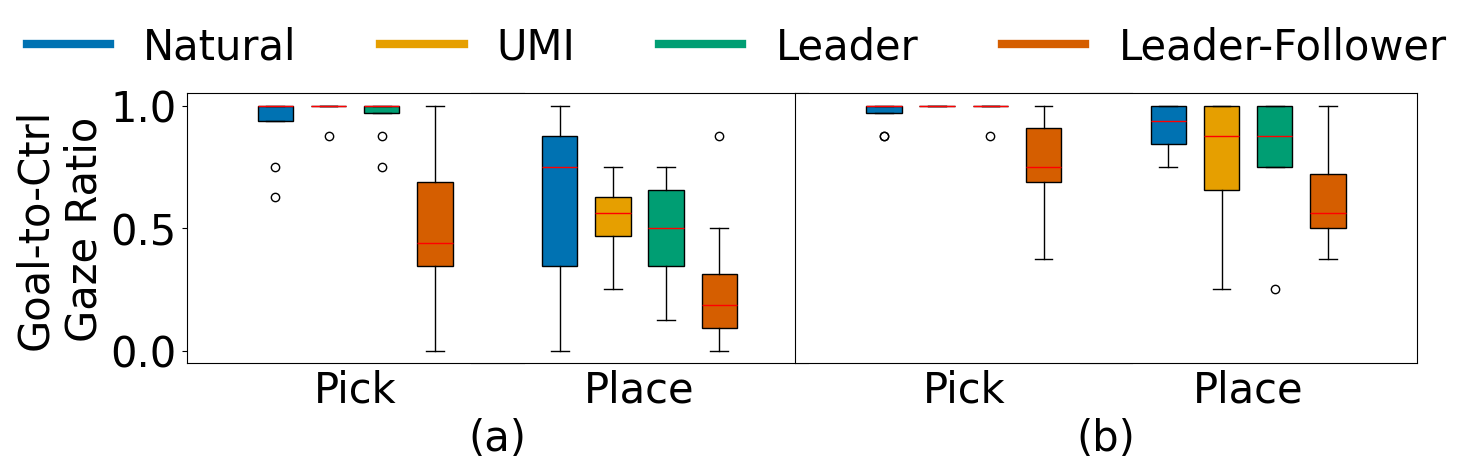
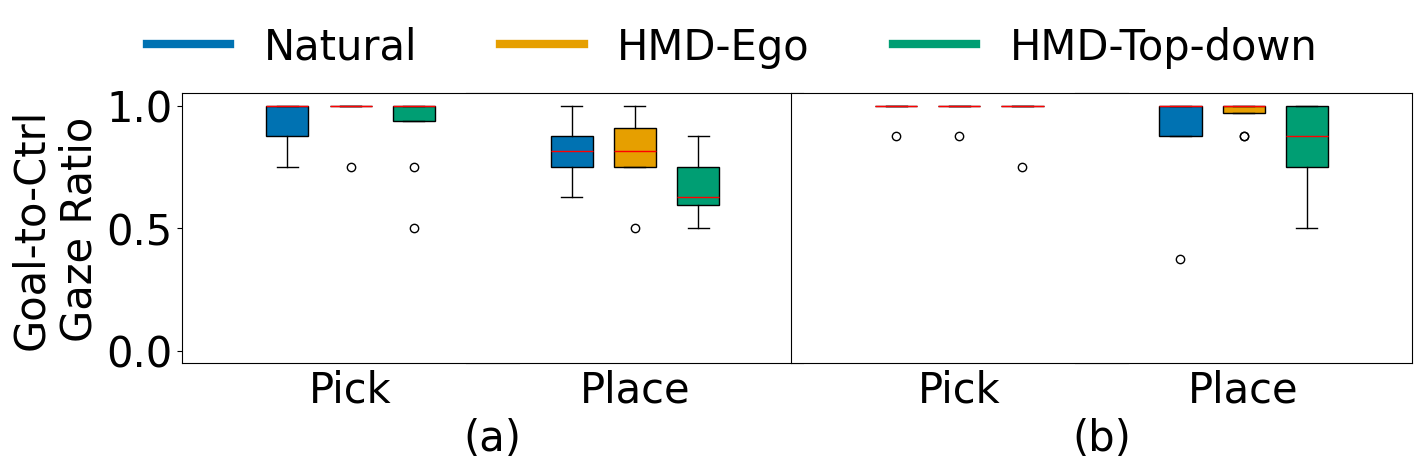
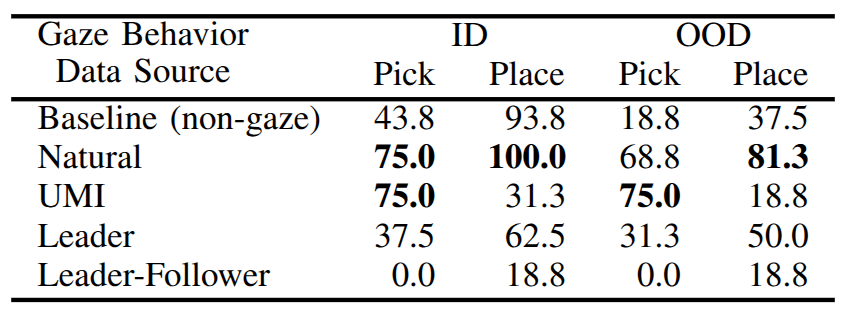
Imitation learning for generalizable performance often requires a large volume of demonstration data, making the process significantly costly. One promising strategy to address this challenge is to leverage the cognitive skills of human demonstrators with strong generalization capability, particularly by revealing the underlying task demands reflected in their gaze behavior. However, imitation learning typically involves humans collecting data using demonstration devices that emulate a robot's embodiment and visual condition. This raises the question of how such devices influence gaze behavior. We propose an experimental framework that systematically analyzes human demonstrators' gaze behavior across a spectrum of robot-emulating demonstration devices. Our experimental results show that certain device properties shift gaze from task-goal cues (e.g., objects) toward control-monitoring cues (e.g., the end-effector). Furthermore, these shifts directly affect the performance of typical gaze-based imitation learning models, sometimes degrading it below non-gaze baselines.
Method
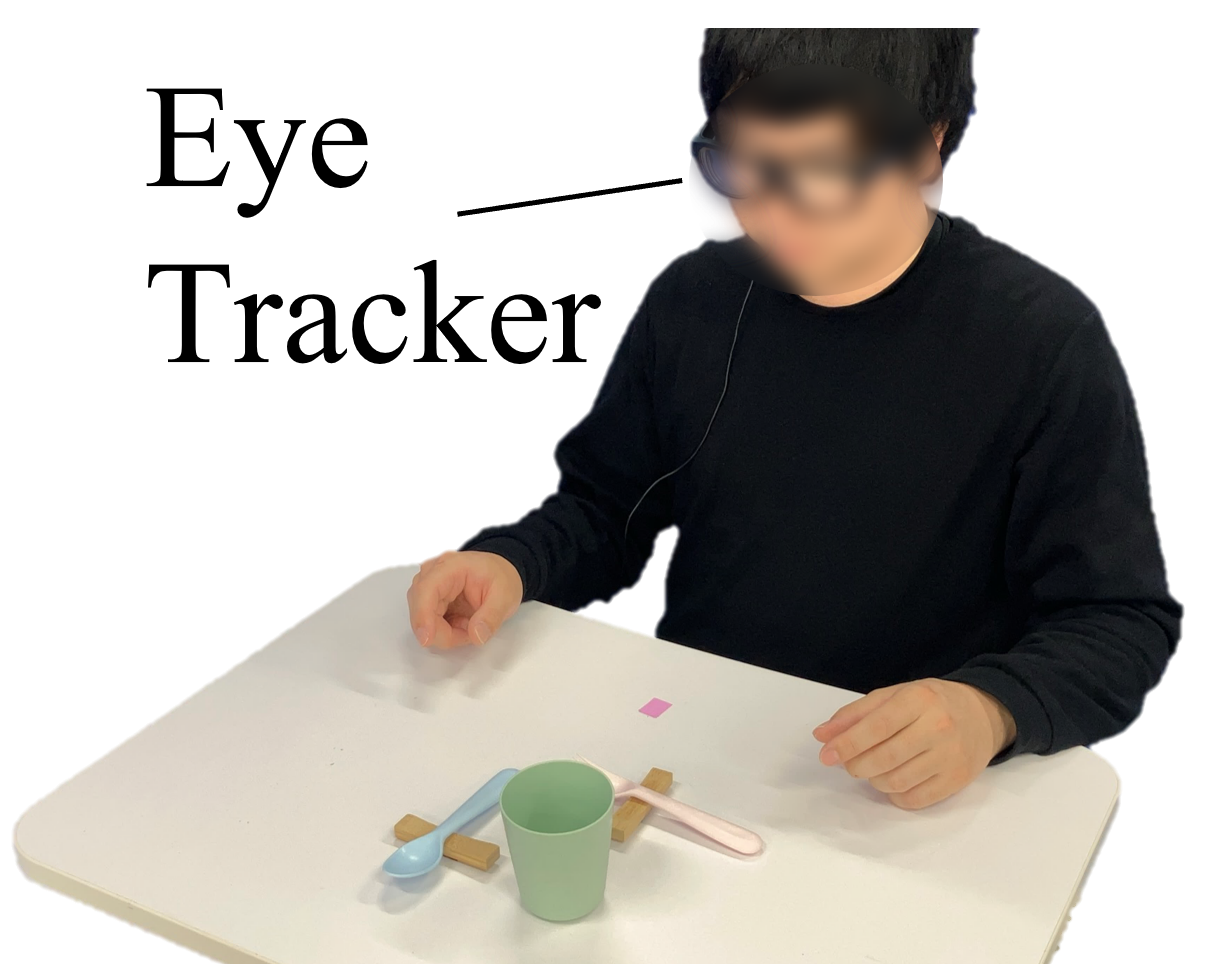
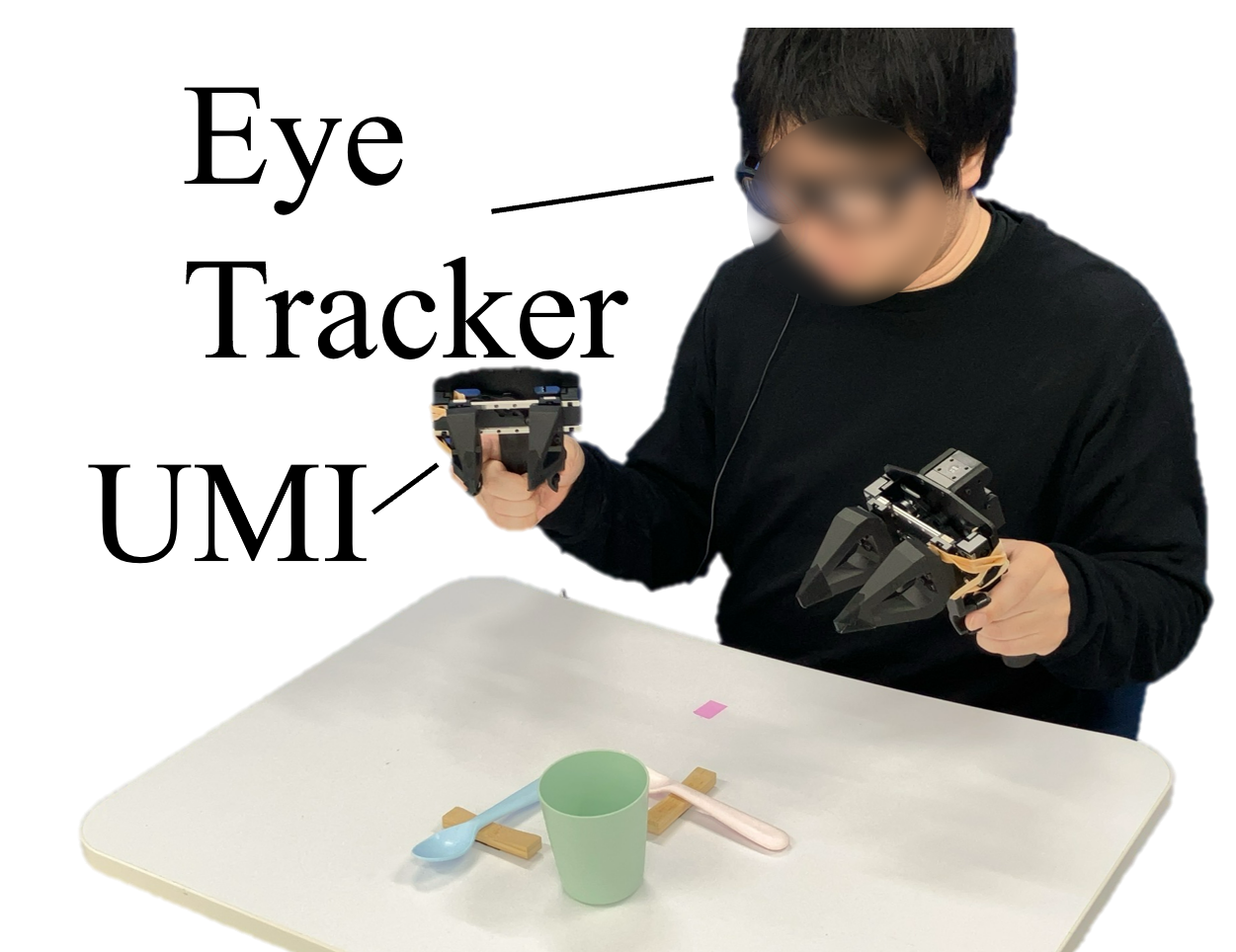
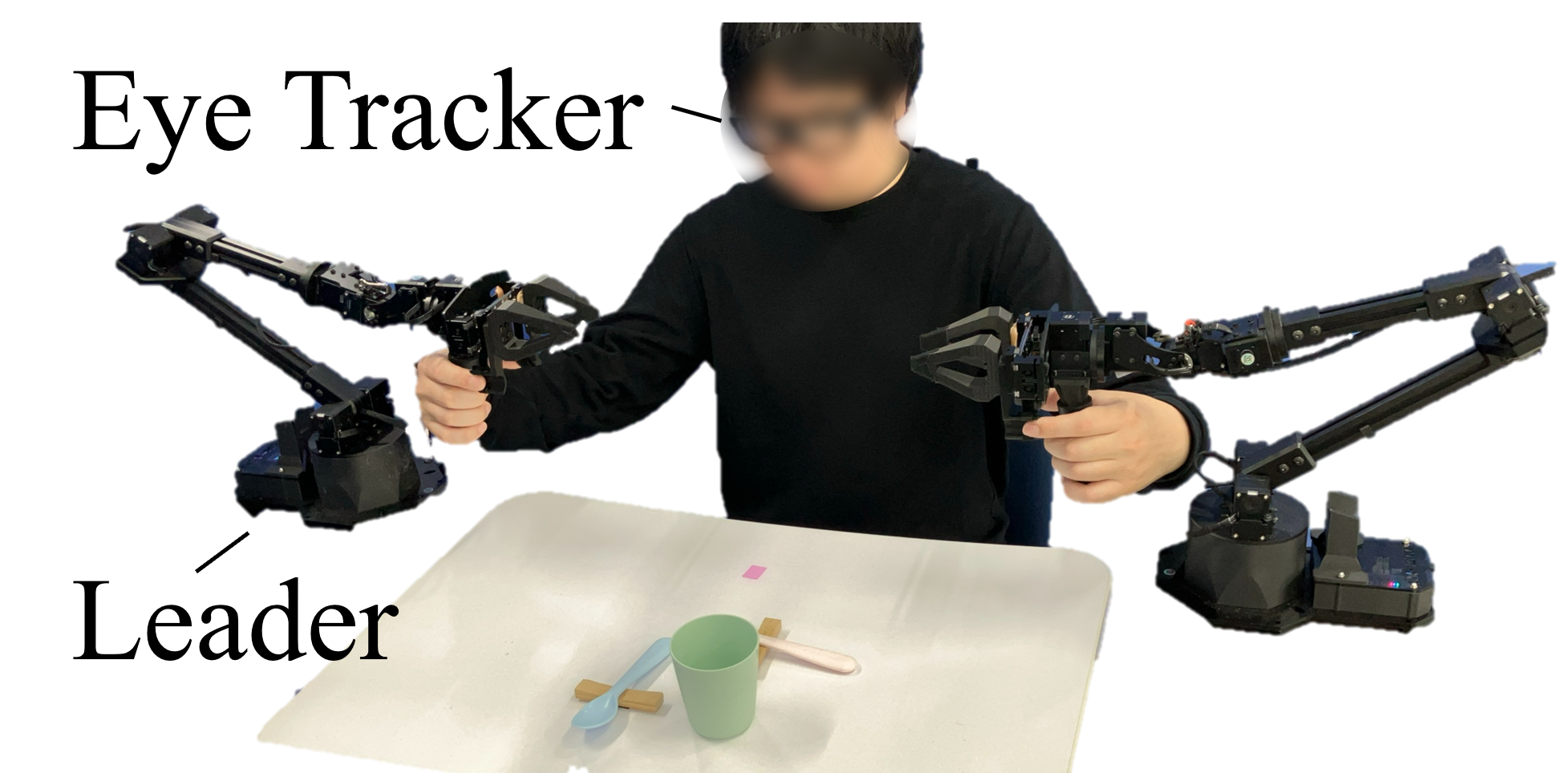
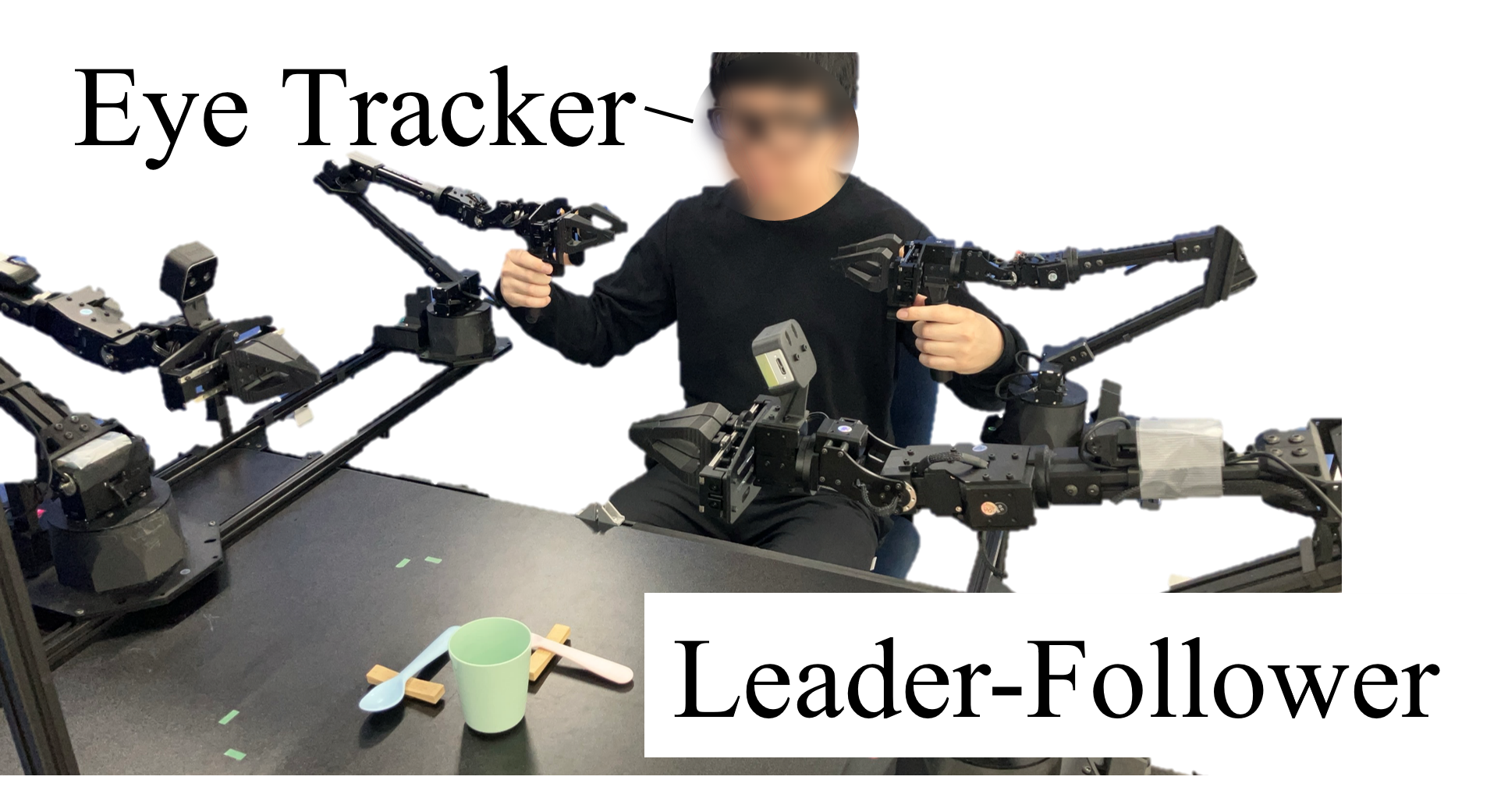
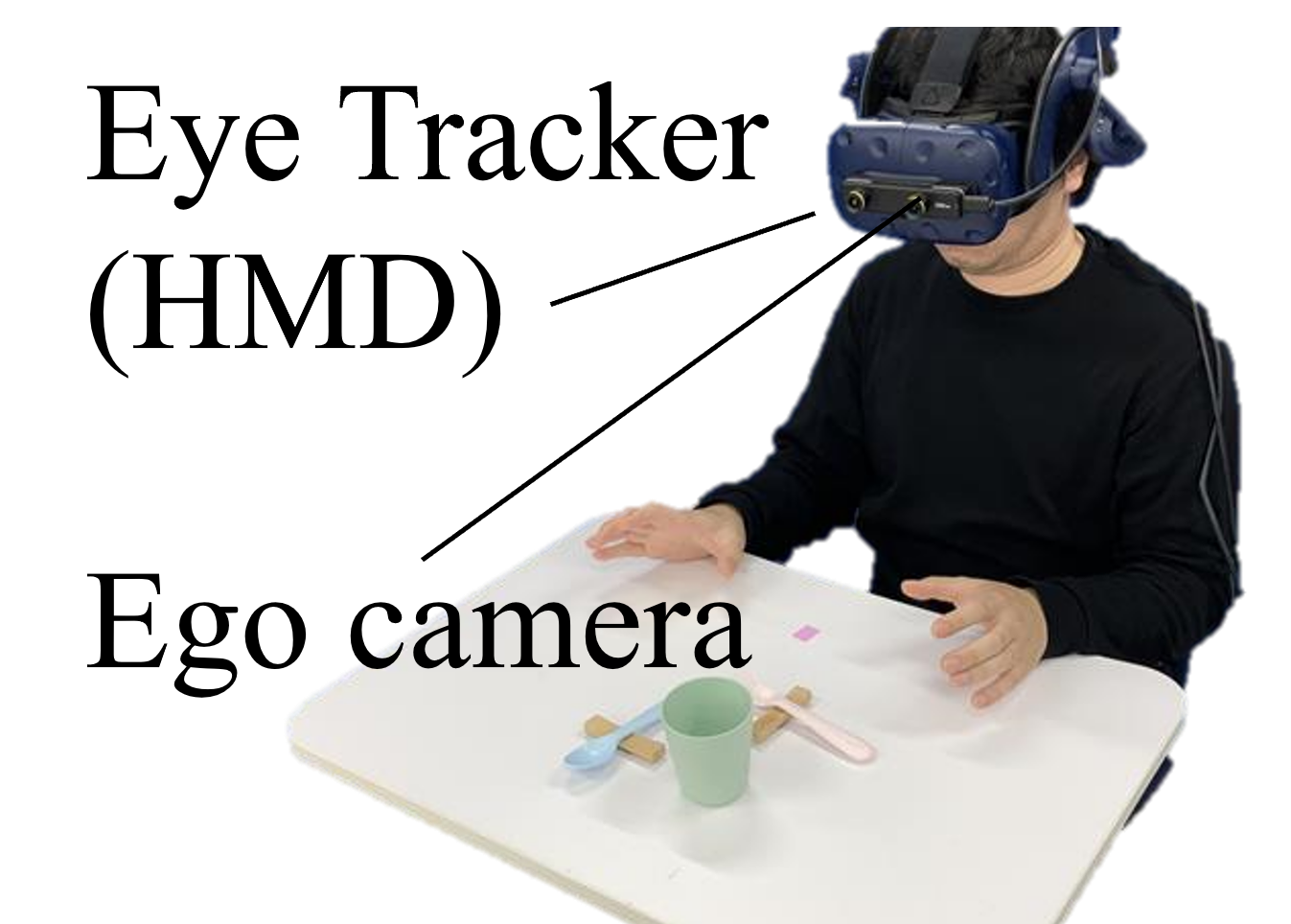
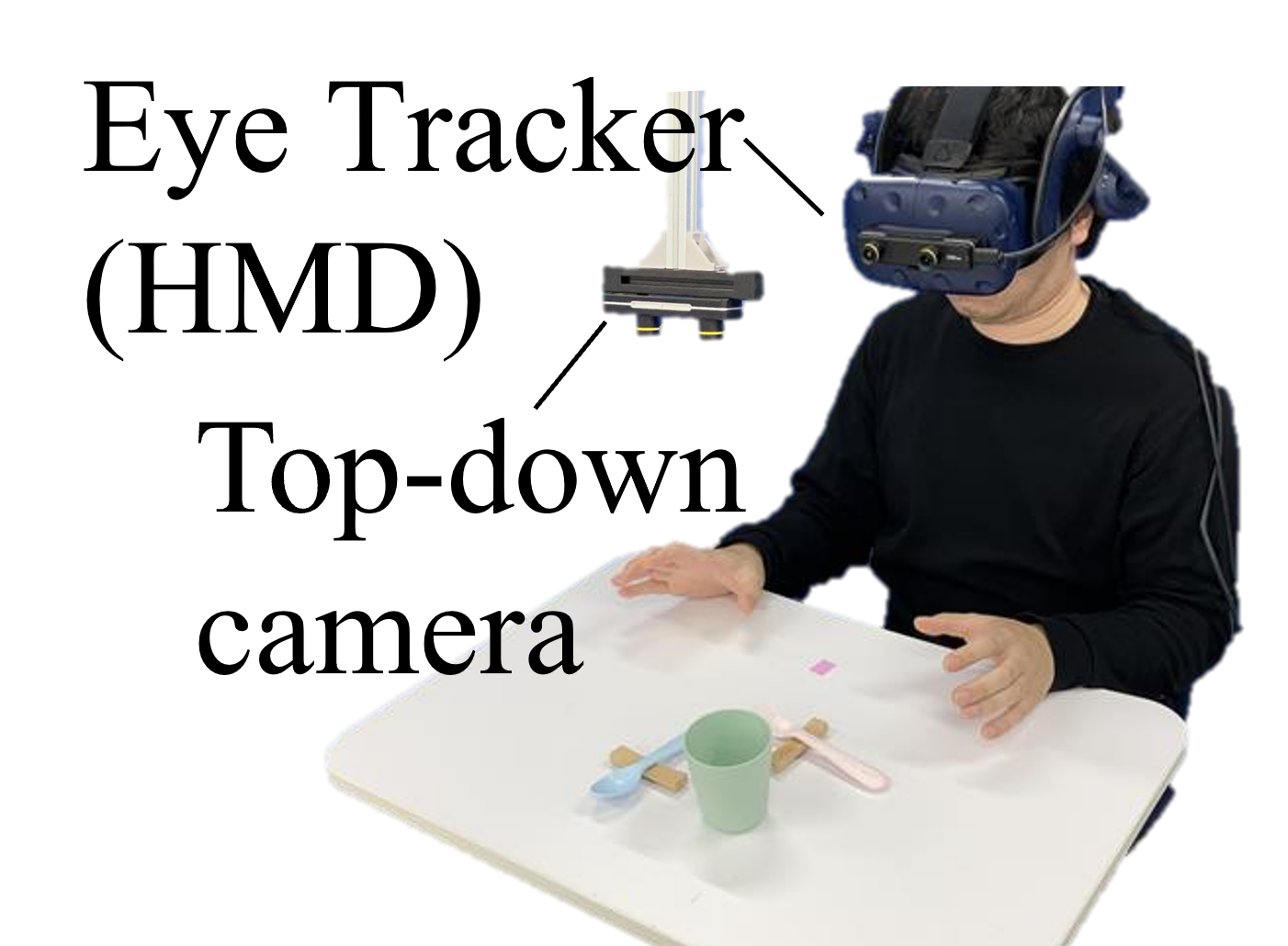
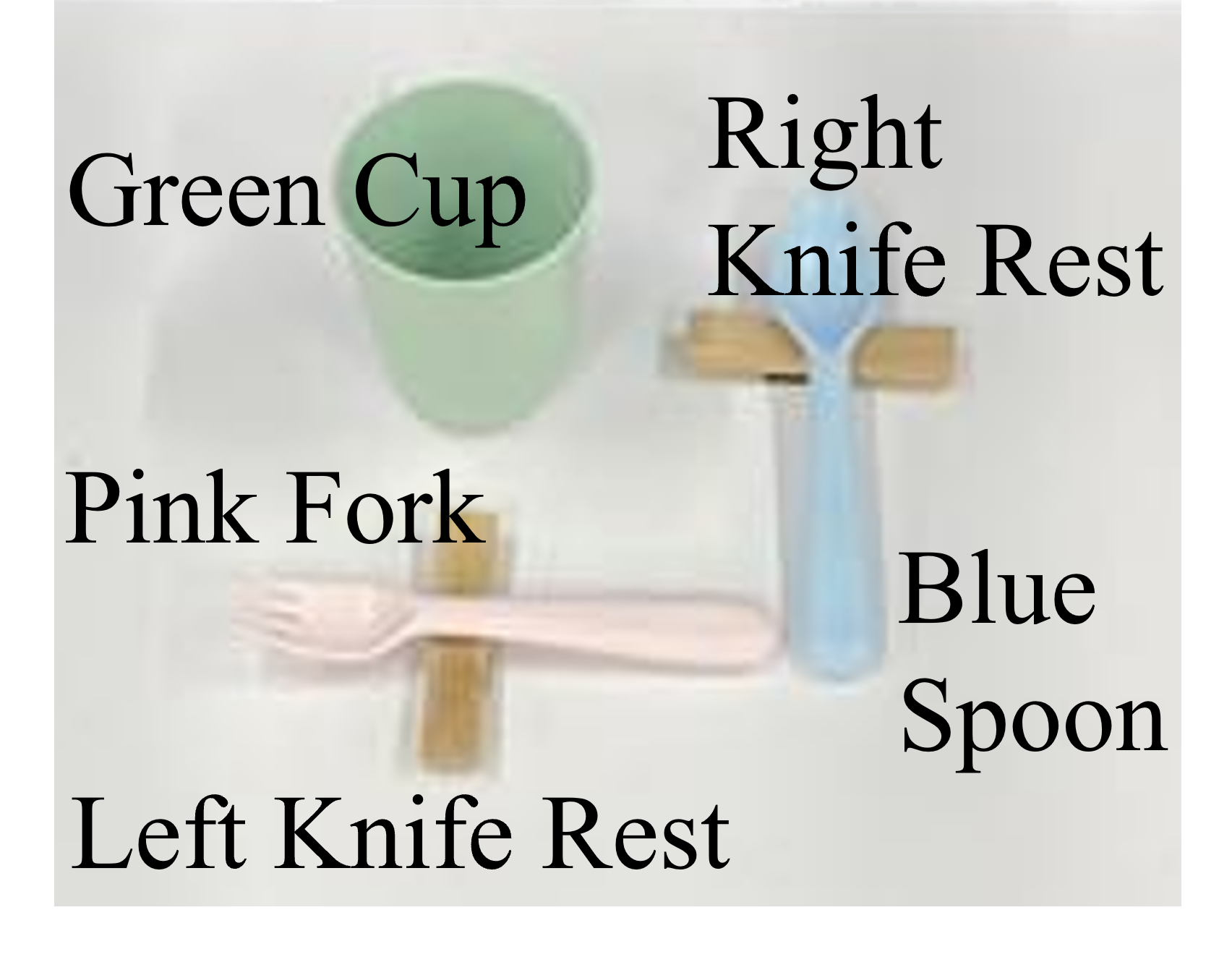
To investigate how demonstration devices influence demonstrators' gaze behavior, we conduct two comparisons: (1) an embodiment comparison across four conditions—(a) Natural, (b) UMI, (c) Leader, and (d) Leader–Follower, and (2) a visual condition comparison across three conditions—(a) Natural, (e) HMD-Ego, and (f) HMD-Top-down. To provide foundational insights and empirical validation, all comparisons are conducted using a canonical pick-and-place benchmark with (g) commonly available household objects.
Results
Citation
@inproceedings{Ishida2026WhenDoHumansLook,
    title = {Where Do Humans Look When Demonstrating to Robots? Human Gaze Behavior in Pick-And-Place Tasks across Demonstration Devices},
    author = {Ishida, Yutaro and Matsubara, Takamitsu and Kanai, Takayuki and Shintani, Kazuhiro and Bito, Hiroshi},
    booktitle = {IEEE International Conference on Robot and Human Interactive Communication (RO-MAN)},
    year = {2026}
}
Notification
The project page was solely developed for and published as part of the publication, titled ``Where Do Humans Look When Demonstrating to Robots? Human Gaze Behavior in Pick-And-Place Tasks across Demonstration Devices'' for its visualization. We do not ensure the future maintenance and monitoring of this page.
Contents might be updated or deleted without notice regarding the original manuscript update and policy change.
This webpage template was adapted from DiffusionNOCS -- we thank Takuya Ikeda for additional support and making their source available.